
A Grave Tale
The Secrets Cemeteries Hold

The following sentence might make me sound like a terrible person. When I visited my father’s grave in March, it was only the second time I’d done so since he died almost thirty years ago.
The truth is, I feel no emotional connection with graves. Whenever I visit one, I have absolutely no sense of the person I knew was interred in the plot at my feet. The spot itself holds no memories of them. How could it? They were never there until after they passed. Inside my head, in the vortex of memories, is where those who have left us continue to exist.
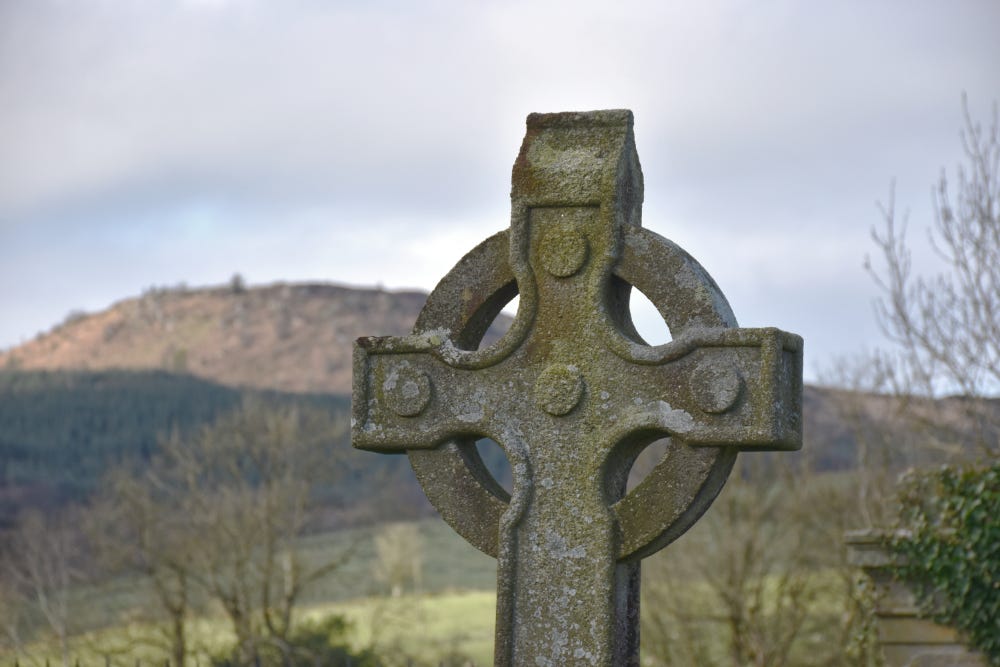
However, all of the above is no excuse for me forgetting where my father was buried. I really couldn’t remember. It’s not as if Bute is a big place after all; there are only a handful of potential places it could be. In the end, I had to ask a cousin. Location confirmed, Andy and I detoured from a hike up Barone Hill to pay a long overdue visit.
The cemetery (that’s all it is called on Google Maps) lies just outside Rothesay. It’s basically just another humble field among many, but one which contains neat rows of gravestones. Even though it is small, I couldn’t remember exactly where my dad’s grave was located. Luckily, Andy did have a rough idea and we tracked it down within moments. I was relieved to see the ground remained undisturbed. A few days after he was buried, my mum visited and found the earth swollen. This gave her a bit of a turn. ‘I thought, oh my god, he’s trying to force his way back out,’ she told me. That notion gave us all nightmares.
As well as being ashamed for not remembering where he was buried, I was doubly embarrassed by the apparent lack of effort we had put into coming up with something for his headstone. It simply states something like ‘Husband, Father & Son.’ Something like? It’s only been a few weeks since I stood in front of it and I can’t exactly remember. Maybe there’s something subconscious going on in my head where graveyards are concerned. I know I was scared of them yet, at the same time, fascinated.
Ironically, given the admission above, I enjoy strolling around cemeteries. There are stories and potential mysteries galore within them. On our last visit to Bute, we visited more than the one where my father is buried.
The Copper Man
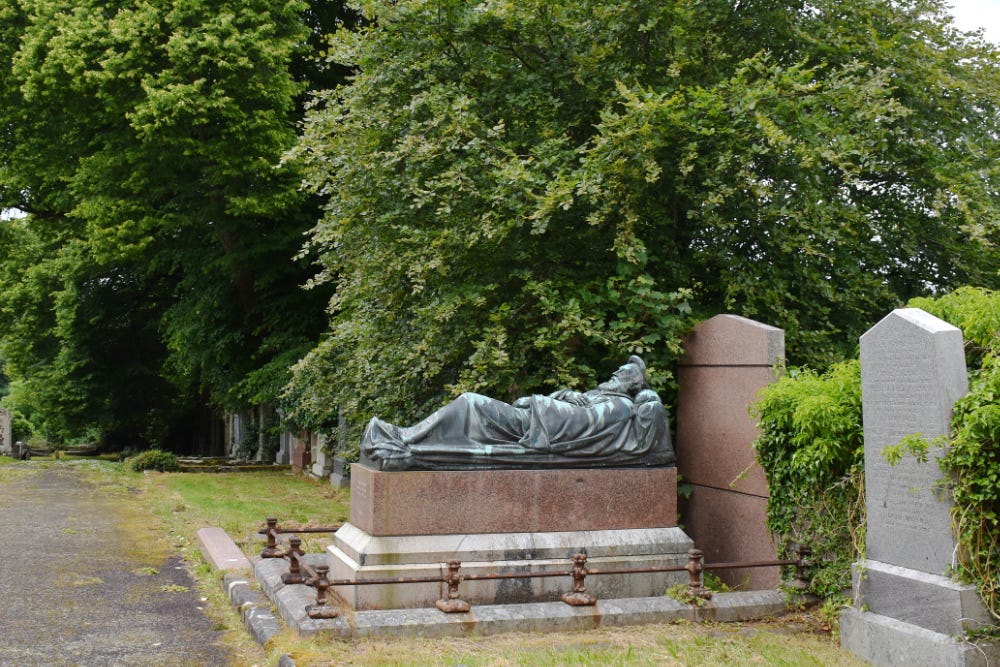
The Copper Man in the graveyard of what was the High Kirk frightened me when I was young. He is a larger-than-life bronze figure of a man reclining atop a granite plinth. I have no recollection where the story originated, but we believed when darkness fell, the Copper Man would rise from his granite bed and creak his way around the cemetery. The idea of encountering him was terrifying. A fictional version of him appears in one of the Scottish novels I’m working on.
The Copper Man is James Duncan, who was born in 1796 at Ardnahoe Farm on the island. In the 1820s, he travelled to Valparaiso in Chile where he made his fortune as a copper merchant. Despite also living in California and Chile, it was Rothesay his body was returned to after he died in 1874. There are conflicting accounts of where James Duncan died, but I’m going to favour the one which placed him in Valparaiso as it fits with the legend. One story claims his body was brought back to his homeland pickled in a barrel of rum. During the voyage, unwitting sailors broke into the barrel for the occasional sneaky drink. Not so much rum and coke as rum and corpse.
Two Tragedies
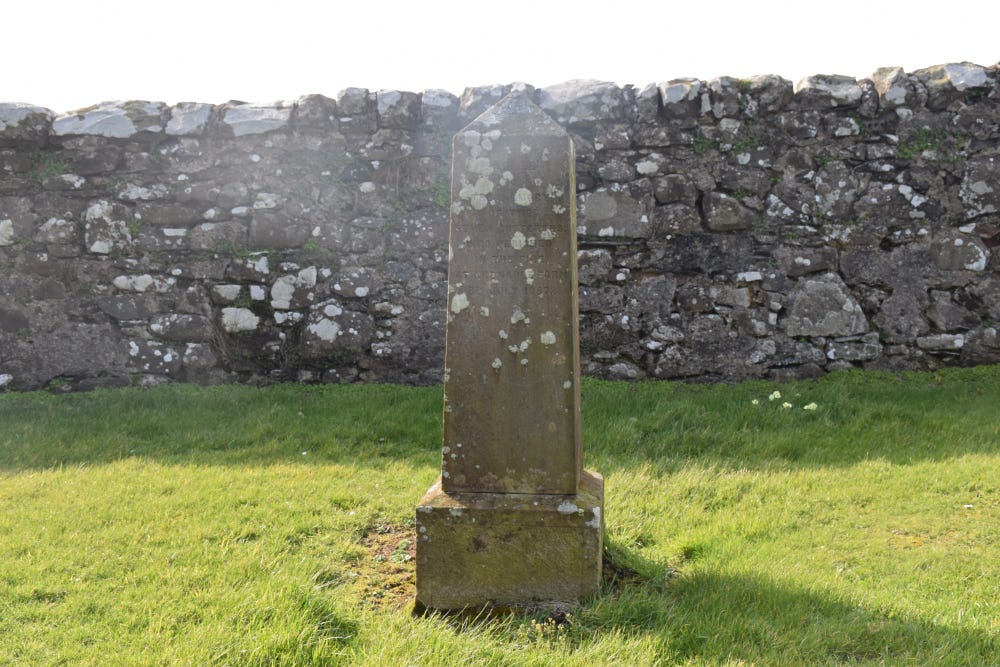
During our visit, I wanted to finally seek out a memorial to the seven tattie howkers (potato pickers) who lost their lives in a barn fire at Ardnahoe Farm in 1887, coincidentally the place where James Duncan was born. I’ve written about the tragedy of the ‘Ardnahoe Seven’ before. The monument is an unassuming obelisk in a corner of the small graveyard. There are no names inscribed. As they were itinerant workers from Ireland, nobody knew their names, not even their two colleagues who survived the fire. What was curious about the memorial was there were seven coins squeezed into a narrow gap at its base, presumably one for each victim. Who placed them there and why?
In another part of the graveyard lies a small plaque to Captain Ian T.J McCalman, whose ship, the SS Balmoral, was sunk by German bombers off the coast of Ireland in 1940, killing all 27 (or 22 depending on which source you read) crew members.
What struck me as we wandered around Kingarth Cemetery was how evocative and poetic many epitaphs were. One which especially stood out was this line, borrowed from Elegy Written in a Country Churchyard by Thomas Gray:
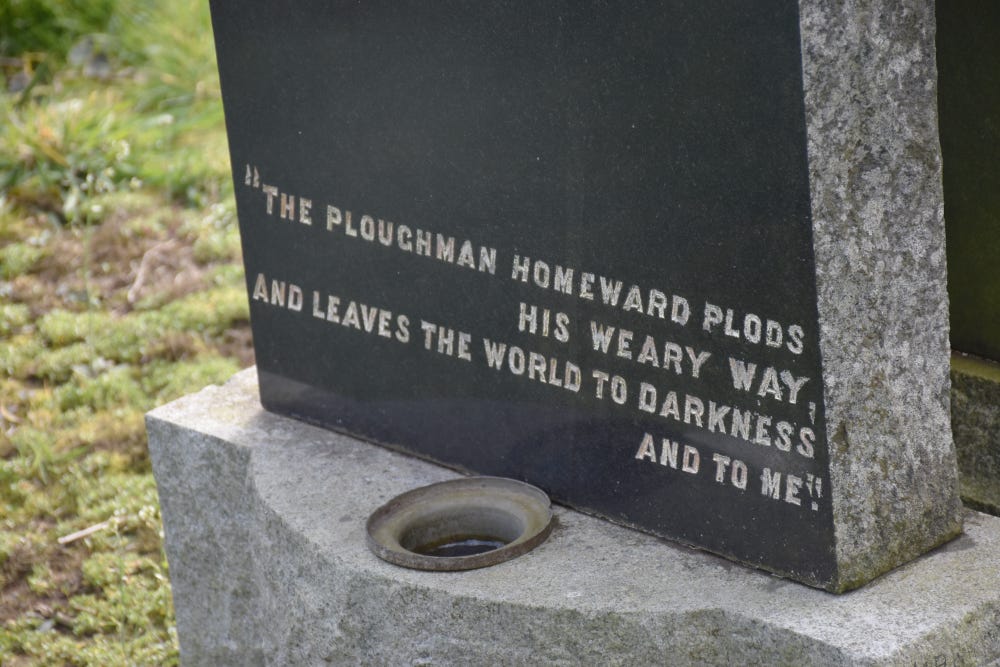
It rammed home just how imaginative our ‘Husband, Father & Son’ was. However, as we’d left my dad’s grave, I was consoled slightly by an inscription on a headstone two doors down, so to speak. It read ‘A Father.’
At least we are not the most unimaginative family on the island.